

February 7, 2013–Congratulations to ENIGMA’s David Stahl on this well-deserved and prestigious award!
The ultimate goal of the ENIGMA SFA research is to generate a quantitative understanding of phenomena across these multiple scales so that scientists can predict and rationally alter the behavioral responses of microbes and their communities to obtain desired environmental goals. ENIGMA research is divided into four components.
David’s work on evolutionary and ecological origins of community assembly, stability, and efficiency informed by model microbial mutualism in co-cultures anchors many of our ongoing ENIGMA projects.
News Articles Archives
Liquid Chromatography Quadrupole Time-of-Flight Mass Spectrometry Characterization of Metabolites Guided by the METLIN Database
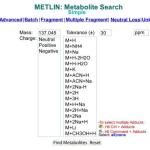
February 1, 2013–Untargeted metabolomics provides a comprehensive platform for identifying metabolites whose levels are altered between two or more populations. By using liquid chromatography quadrupole time-of-flight mass spectrometry (LC-Q-TOF-MS), hundreds to thousands of peaks with a unique m/z ratio and retention time are routinely detected from most biological samples in an untargeted profiling experiment. Each peak termed a metabolomic feature, can be characterized on the basis of its accurate mass, retention time, and tandem mass spectral fragmentation pattern. Here a seven-step protocol is suggested for such a characterization by using the METLIN metabolite database. The protocol starts from untargeted metabolomic LC-Q-TOF-MS data that have been analyzed with the bioinformatics program XCMS, and it describes a strategy for selecting interesting features as well as performing subsequent targeted tandem MS. The seven steps described will require 2-4 h to complete per feature, depending on the compound.
A Large-Scale Evaluation of Computational Protein Function Prediction
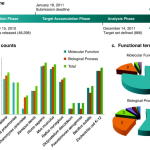
January 31, 2013–The discrepancy between the pace of sequencing and functional characterization of genomes is a major challenge in understanding complex microbial metabolic processes and metabolic interactions in the environment. Here, we identified and validated genes related to the utilization of specific metabolites in bacteria by profiling metabolite utilization in libraries of mutant strains. Untargeted mass spectrometry-based metabolomics was used to identify metabolites utilized by Escherichia coli and Shewanella oneidensis MR-1. Targeted high-throughput metabolite profiling of spent media of 8042 individual mutant strains was performed to link utilization to specific genes. Using this approach we identified genes of known function as well as novel transport proteins and enzymes required for the utilization of tested metabolites. Specific examples include two subunits of a predicted ABC transporter encoded by the genes SO1043 and SO1044 required for the utilization of citrulline and a predicted histidase encoded by the gene SO3057 required for the utilization of ergothioneine by S. oneidensis. In vitro assays with purified proteins showed substrate specificity of SO3057 toward ergothioneine and histidine betaine in contrast to the substrate specificity of a paralogous histidase SO0098 toward histidine. This generally applicable, high-throughput workflow has the potential both to discover novel metabolic capabilities of microorganisms and to identify the corresponding genes.
Full Article →
Baran R., Bowen, B.P, Price, M.N, Arkin, A.P, Deutschbauer, A.M, Northen, T.R. (2013) Metabolic Footprinting of Mutant Libraries to Map Metabolite Utilization to Genotype. ACS Chemical Biology 8(1): 189-199 doi:10.1021/cb300477w (Recommended by Faculty of 1000)
The automated annotation of protein function is challenging. As the number of sequenced genomes rapidly grows, the overwhelming majority of protein products can only be annotated computationally. If computational predictions are to be relied upon, it is crucial that the accuracy of these methods be high. Here we report the results from the first large-scale community-based critical assessment of protein function annotation (CAFA) experiment. Fifty-four methods representing the state of the art for protein function prediction were evaluated on a target set of 866 proteins from 11 organisms. Two findings stand out: (i) today’s best protein function prediction algorithms substantially outperform widely used first-generation methods, with large gains on all types of targets; and (ii) although the top methods perform well enough to guide experiments, there is considerable need for improvement of currently available tools.
Full Paper →
Radivojac P, Clark WT, Oron TR, Schnoes AM, Wittkop T, Sokolov A, Graim K, Funk C, Verspoor K, Ben-Hur A, Pandey G, Yunes JM, Talwalkar AS, Repo S, Souza ML, Piovesan D, Casadio R, Wang Z, Cheng J, Fang H, Gough J, Koskinen P, Törönen P, Nokso-Koivisto J, Holm L, Cozzetto D, Buchan DW, Bryson K, Jones DT, Limaye B, Inamdar H, Datta A, Manjari SK, Joshi R, Chitale M, Kihara D, Lisewski AM, Erdin S, Venner E, Lichtarge O, Rentzsch R, Yang H, Romero AE, Bhat P, Paccanaro A, Hamp T, Kaßner R, Seemayer S, Vicedo E, Schaefer C, Achten D, Auer F, Boehm A, Braun T, Hecht M, Heron M, Hönigschmid P, Hopf TA, Kaufmann S, Kiening M, Krompass D, Landerer C, Mahlich Y, Roos M, Björne J, Salakoski T, Wong A, Shatkay H, Gatzmann F, Sommer I, Wass MN, Sternberg MJ, Škunca N, Supek F, Bošnjak M, Panov P, Džeroski S, Šmuc T, Kourmpetis YA, van Dijk AD, ter Braak CJ, Zhou Y, Gong Q, Dong X, Tian W, Falda M, Fontana P, Lavezzo E, Di Camillo B, Toppo S, Lan L, Djuric N, Guo Y, Vucetic S, Bairoch A, Linial M, Babbitt PC, Brenner SE, Orengo C, Rost B, Mooney SD, Friedberg I. A large-scale evaluation of computational protein function prediction. Nat Methods. 2013 Mar;10(3):221-7. doi: 10.1038/nmeth.2340. Epub 2013 Jan 27. PubMed PMID: 23353650; PubMed Central PMCID: PMC3584181
ENIGMA Metabolic Footprinting Publication Recommended by Faculty of 1000
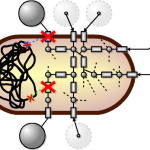
January 31, 2013–The discrepancy between the pace of sequencing and functional characterization of genomes is a major challenge in understanding complex microbial metabolic processes and metabolic interactions in the environment. Here, we identified and validated genes related to the utilization of specific metabolites in bacteria by profiling metabolite utilization in libraries of mutant strains. Untargeted mass spectrometry-based metabolomics was used to identify metabolites utilized by Escherichia coli and Shewanella oneidensis MR-1. Targeted high-throughput metabolite profiling of spent media of 8042 individual mutant strains was performed to link utilization to specific genes. Using this approach we identified genes of known function as well as novel transport proteins and enzymes required for the utilization of tested metabolites. Specific examples include two subunits of a predicted ABC transporter encoded by the genes SO1043 and SO1044 required for the utilization of citrulline and a predicted histidase encoded by the gene SO3057 required for the utilization of ergothioneine by S. oneidensis. In vitro assays with purified proteins showed substrate specificity of SO3057 toward ergothioneine and histidine betaine in contrast to substrate specificity of a paralogous histidase SO0098 toward histidine. This generally applicable, high-throughput workflow has the potential both to discover novel metabolic capabilities of microorganisms and to identify the corresponding genes.
Full Article →
Baran R., Bowen, B.P, Price, M.N, Arkin, A.P, Deutschbauer, A.M, Northen, T.R. (2013) Metabolic Footprinting of Mutant Libraries to Map Metabolite Utilization to Genotype. ACS Chemical Biology 8(1): 189-199 doi:10.1021/cb300477w (Recommended by Faculty of 1000)
Metabolomics: Sifting Through Complex Samples

January 18, 2013-BlueMoleculeReview article of advances in Metabolomics about the team at Scripps Research Institute- Gary Siuzdak, Gary Patti and Ralph Tautenhahn et al.
Biocompare Article →
A view from above: cloud plots to visualize global metabolomic data.
Patti G.J., Tautenhahn R., Rinehart, D, Cho, K.Shriver L., Manchester M., Nikolskiy, I.Johnson, C. H. Mahieu, N. G. Siuzdak G.
ANALYTICAL CHEMISTRY: 85(2):798-804. (2013)
Meta-analysis of untargeted metabolomic data from multiple profiling experiments.
Patti GJ, Tautenhahn R, Siuzdak G.
NATURE PROTOCOLS: 7(3):508-16. (2012). Epub 2012/02/22
DOI: 10.1038/nprot.2011.454. PMID: 22343432
An accelerated workflow for untargeted metabolomics using the METLIN database.
Tautenhahn R., Cho K. Y., Uritboonthai W., Patti G. J., Siuzdak G.
NATURE BIOTECHNOLOGY: 30, 826-828 |1087-0156. (2012)
DOI:10.1038/nbt.2348
XCMS Online: A web-based platform to process untargeted metabolomic data.
XCMS Online →
Tautenhahn R., Patti G.J., Rinehart D., Siuzdak G.
ANALYTICAL CHEMISTRY: 84 (11), 5035-5039. (2012)